
DolphinRadar

Comparison guide

Choosing a dolphin radar alternative for your workflow

A dolphin radar alternative is worth considering when your current research process does not answer the questions you actually have. Start by comparing the information you need, where it comes from, and what you can verify—not by assuming two services perform the same tasks.

Social media research imagery from dolphinradar

Who each approach suits

A useful replacement depends on the decision you need to make. These examples show how to turn a vague search for another service into a testable requirement.

Creator researching peers

You want to understand what is visible on comparable public profiles without mistaking a single post for a lasting trend.

List the profiles and observations you need, then compare whether each approach lets you verify those observations at their source.
what is dolphin radar

Community manager

You are mainly interested in visible replies and discussion around posts, not an all-purpose profile overview.

Test the comment-focused task first; a broader service is not automatically better if it adds steps without improving your review.

dolphin radar comment viewer

Story researcher

Your question concerns stories, which can differ from persistent profile posts in availability and context.

Confirm what is currently public and avoid assuming that unavailable or expired material can be recovered by switching services.

dolphin radar story viewer

Privacy-conscious evaluator

You need to know what a service requests from you before using it to research someone else's account.

Review its current access requirements and privacy terms rather than treating the word anonymous as a guarantee.

is dolphin radar anonymous

Migration path

A small, repeatable trial is more informative than moving an entire research process at once.

  1. 1

    Write down the original task

    Name the public account, the question you are trying to answer, and the evidence that would count as an answer. Keep story viewing, comment review, and broader discovery as separate tests.

  2. 2

    Run a like-for-like check

    Use the same publicly available example for each approach. Record what you can see, what you cannot see, and whether a result links back to material you can inspect independently.

  3. 3

    Review access and handling

    Before entering account details or sharing research notes, read the destination service's current terms and privacy information. Do not transfer credentials simply to reproduce a workflow.

  4. 4

    Keep only the useful change

    Adopt an alternative for the specific task it improves. If your original method remains clearer for another task, there is no need to replace every part of the process.

What a comparison cannot establish

This guide is a decision framework, not a live audit of either service. Confirm current behavior on the service itself before relying on it.

1

No access to private material

Comparing services does not make private profiles, restricted posts, or expired stories available. Claims of access should not be accepted without a legitimate basis.

What to do instead

Limit your test to material you are authorized to view and can verify directly.

2

No guaranteed feature match

A different service may support a different workflow. This page cannot certify that the destination reproduces any particular Dolphin Radar control, report, or viewing behavior.

What to do instead

Test your highest-priority task on the current destination before changing your routine.

3

No privacy guarantee

A comparison cannot prove that your activity is anonymous or that two services handle information identically. Those questions depend on current policies and implementation.

What to do instead

Read the applicable privacy notice and avoid submitting sensitive information during an initial evaluation.

The side-by-side decision table

Use this table to compare an existing Dolphin Radar workflow with an evaluation of the platform reached through this site's action. The right column describes what to check, not verified product capabilities.

Current Dolphin Radar workflow Alternative evaluation
Starting point List the tasks you already perform and the results you can verify. Open the destination and identify which of those same tasks it currently supports.
Public information Note which observations come from material visible to you. Check whether each result can be traced to a public, inspectable source.
Stories Document whether story viewing is part of your current task. Test story-related needs separately; do not infer support from a general profile feature.
Comments Identify the posts and visible discussions that matter. Check whether the available workflow helps you review the same discussions.
Access requirements Record what you currently must provide to use the service. Inspect the destination's current access requirements before entering details.
Privacy review Consult the current terms for your existing workflow. Read the destination's current terms and privacy information independently.
Decision rule Keep a task here when its result is clear and verifiable. Switch that task only when a tested workflow better meets your stated need.

From broad interest to a specific test

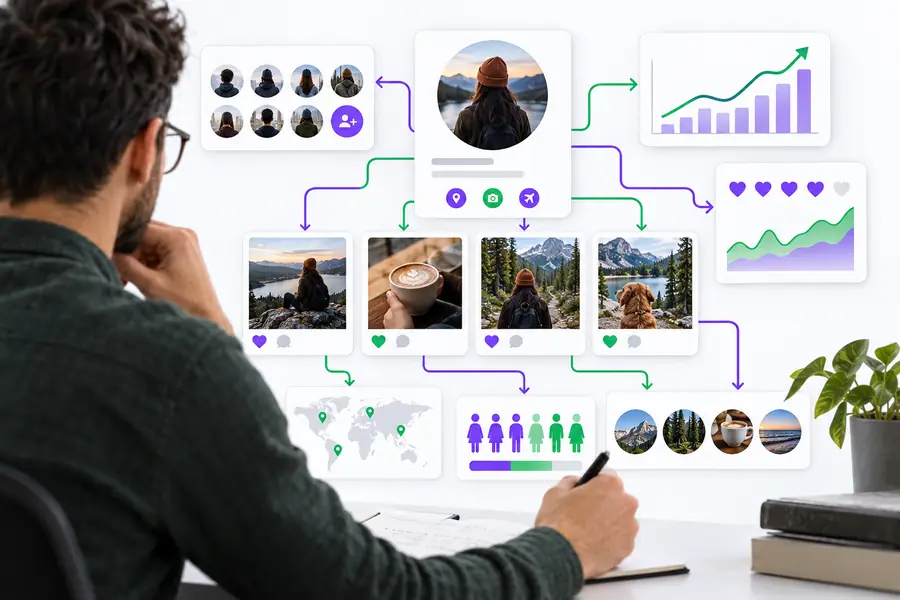
Illustration of reviewing a public social profile
Start with a public profile
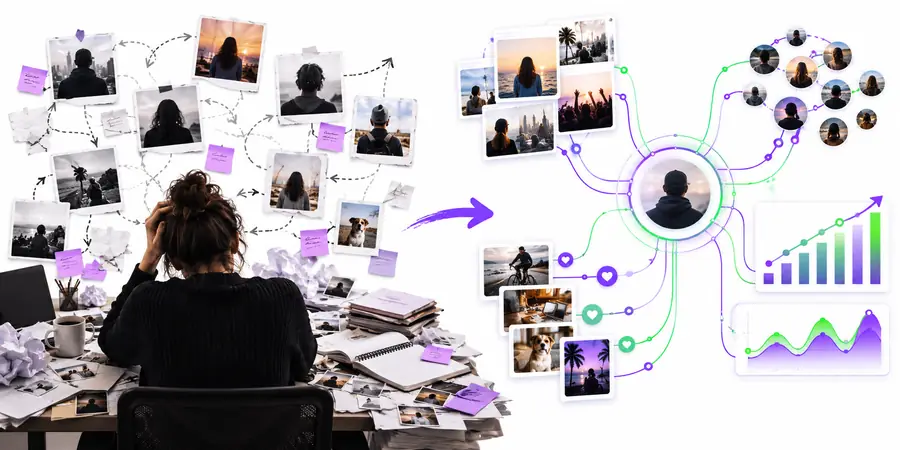
Illustration of considering creator discovery as a research task
Define the research decision

These images illustrate two stages of a research process, not actual screens, outputs, or a demonstrated before-and-after result from either service.

Start with a public profileDefine the research decision

Make the next comparison concrete

Choose one public-profile research question and decide in advance what a useful answer would look like. You can then inspect the destination reached through this site's action and compare its current experience with your existing method. Verify features, access conditions, and privacy information there before committing to a change.

Test your most important task first

  • Start with a task you can describe clearly
  • Check results against material you can inspect
  • Keep access and privacy questions in the decision
Explore the platform

Comparison FAQ

Possible alternatives include checking public profiles directly, using platform-native discovery features, or evaluating another research service such as the destination linked from this page. These are different approaches rather than confirmed feature-for-feature substitutes. Choose according to the task you need to complete.

Compare the exact research task, the visibility of source material, the access requirements, and how easily you can check a result. A service that suits profile discovery may not suit story or comment review. Test each important task separately.

No. Similar positioning does not establish that two services offer the same viewing options, data, or workflow. Check the destination's current features against a short list of tasks you already perform.

Pick one public example and write down the question you want answered. Compare what each approach shows, whether you can verify it, and what information you must provide to use it. Keep your existing process until the new approach proves useful for that specific task.

Explore profiles
Explore profiles